Langtang Heritage Trek

12 Days

This Langtang Heritage Trek is a specially designed off-the-beaten trail that highlights an ancient and rich Tamang cultural heritage trail, combining it with the picturesque scenery of the secret Langtang valley.

Overview

About the trek:
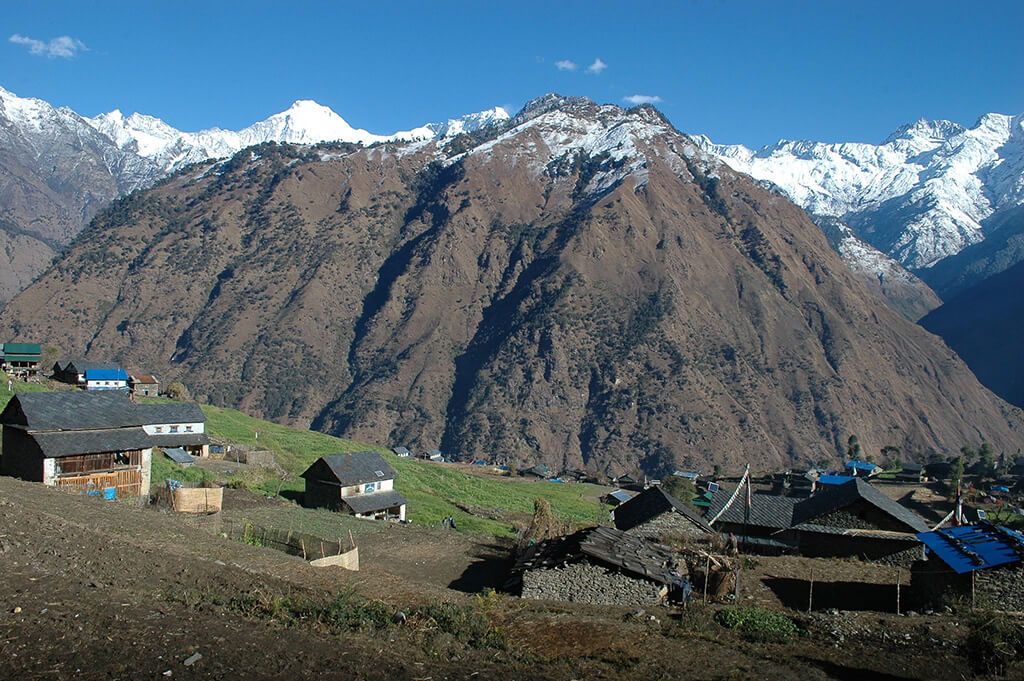
This Langtang Heritage Trek is a specially designed off-the-beaten trail that highlights an ancient and rich Tamang cultural heritage trail, combining it with the picturesque scenery of the secret Langtang valley. A formerly cramped region near the Tibetan border, the unexplored northern Langtang valley, has recently developed into the Langtang Tamang Heritage Trail. The people in the area are mostly of Tamang (Tibetan) origin, whose culture and crafts have remained unchanged. All this craftsmanship, dress, traditionally built stone households, and beautifully carved wooden porches reflect the solitude and serenity of the Himalayan scenery.

Having explored the cultural heritage sites in the Kathmandu valley, the guide took a drive to Syabrubesi to start our Langtang heritage trek. He has to pass many traditional settlements and monasteries that have remained unchanged. Panoramic views of Mt.
Langtang, Kerung, and Ganesh Himal are stunning. The fort at Rasuwagadi is a historical reminder of the Nepal-Tibet relationship that has existed for many centuries. A special arrangement of homestay programs in some places enhances the cultural
experience. This allows having a close interaction with the local people, which is rare on a normal trekking route. So take a drive back to Kathmandu to end the memorable Langtang Heritage Trek.
The Tamang Heritage Trail may be the most reachable trekking region in Nepal, where trekkers can experience some of the most beautiful and natural scenery in the country and trek through unimpaired Tamang villages while providing sustainable economic
benefit to the community. The history of the Tamang Heritage Trail goes several hundred years back, when the trail was used as a trading route that connected Tibet and Nepal. Commodities like salt, meat, livestock, and crops were brought across the
border and traded in these regions. In the end, those Tibetan traders started to settle down here, changing their ethnicity to Tamang. Though the name “The Langtang Tamang Heritage Trails” nevertheless, their Tibetan culture and traditions remained intact. They will be stunned to see how well these people have conserved their ancient culture and traditions. The Langtang Tamang Heritage Trail will reward you with the most traditional Tamang villages, culture, life, artifacts, relics, and nature untouched by
modernity.

TREK IN HIGHLIGHT:
-Nature’s cultural teahouse trek in Langtang in the region
-The perfect combination of Langtang trek and Tamang heritage trail.
-Visit the Kenjin Gompa.
-Hike the Kenjin Ri for stunning Himalayan vistas.
-Supplemental oxygen cylinders and medical kits provide added security.
-On a trip, all full-board meals with tea, coffee, drinking water, and other necessary equipment are provided.
-Experienced trek guide with supporting crew
-Trek gear like a sleeping bag and a warm jacket provides
-Trek duffle bag and T-shirt are complimentary.

Best time for the trek:
The perfect time for the trek is about Monsoon Season this is the least good time for trekking among the four seasons. The monsoon season falls in the months of June, July, and August. During these months, researchers and botanists visit the routes. This
is the season of heavy rainfall. It can rain continuously for days, increasing the likelihood of landslides and flooding and impeding your Tamang Heritage trek. Spring Season because spring is between March and May, these are the busiest months for Tamang Heritage Trail Langtang. The roads are filled with trekkers who love to see nature recover its missing beauty. The Autumn season September, October, and
November are the autumnal seasons. The peak hiking season is about the Tamang Heritage Trek trails. months, when trekkers crowd the routes most. The weather and temperature are just right, offering the best trekking experience. Nature’s beauty is at its
peak, which makes the walk very remarkable. And the clear sky will let trackers see the magnificent peaks. During the day it is sunny and warm; during the night it can be cold. So, escort warm clothes during Tamang Heritage Trekking is safer. Winter season winter takes place during the months i.e.: December, January, and February. It is the off-season to proceed with trekking. If people enjoy walking in silence, the routes are
quiet, which is a plus point.

At Trek Nepal Trips, we are committed to making your trek the best experience you will ever have. If you are interested in joining the Langtang Heritage Trek, contact us and we will take care of everything for you. Please note that these trips are completely customizable according to your preference. The itinerary is only for reference.
Itinerary

Upon arrival at Kathmandu, you will greet and welcome by our agency’s representative in front of the Arrival gate with the Display board of Himalayan Exploration Treks then transfer to your Hotel.

During the free day in Kathmandu, you may have a chance to visit the heritage site of Kathmandu valley, followed by a pre-trip departure meeting regarding upcoming trekking peak climbing, where you meet a trekking guide and other team members. They will brief you about the team formation, equipment, and nature of peak climbing and other necessary information

In the early morning, the team will head to Shyabru Bensi (1467 m.) by bus. 7-8 hours picturesque scenic bus journey to Shyabru Bensi, passing by the lowland villages and rivers along the route, can reach the start point of the trek. Night at lodge

This is the first day of the journey. It is not much difficult to walk in the low land but encounter several up and down along the trail. It makes you a bit tired. A trail goes along the Langtang river, crossing many suspension bridges, forests, and villages to get to Lama Hotel (Lodge)

Early morning after breakfast, heads toward Langtang village along the Langtang River, traversing by dense forest, gradually climbing up. As we reach Langtang village, it offers a magnificent view of Langtang Lirung and Dzangchhebo in front, leaving the dense forest in the background. (Lodge)

As usual in the morning, the scenery is the same, with several chhorten, Mani walls, and carving stones along the trail, which suppose to protect from the wind, according to locals. The Himalayas and spectacular pastures surround Kyangjing Gompa.

Visit Tsergo – Ri peak 4980m 7 hours. The excellent views of the Tibetan range, Yala peak, Langshisha peak, Gabgchhenpo peak, Shisapangma peak, and Ganja la chuli.

Exploring the valley of Kyangjing Gompa and its surroundings. It is incredible to keep in memory and returns the same to Lama Hotel.

Thulo Shyabru is the biggest Tamang village in the region. The trail goes downhill, bypassing the lush green forest along the trail. After the Pahiro Thaplo (top of the landslide), there is two different way. One goes to Shyabru Bensi, and another is Thulo Shyabru village. Take a way to turn right and continue uphill to Thulo Shyabru village.

This is the last journey; walk up to Dunche by passing through the dense forest and villages where we can see the alpine apple farm along the trail and get to Dhunche for the night. (Lodge)

A picturesque drive from Dunche to Kathmandu takes 6-7 hours by bus, passing several villages, landscapes, rice fields, and Himalayan scenery.

You will transfer to the airport 3 hours before the scheduled flight.

Includes

  • Airport pick-up and drop-off in a private vehicle.
  • hotel accommodation in Kathmandu on a B/B basis.
  • Tea house accommodation during the trek.
  • Hot soup in the high places.
  • The journey included three meals.
  • Farewell dinner in Kathmandu
  • All the transportation is as per the itinerary.
  • A professional guide for the trek and sightseeing.
  • Porter service (2 hikers and 1 porter)
  • Insurance for guides and porters
  • Food and accommodation for the guide and porters.
  • all the necessary documents (permits and TIMS).
  • all government and local taxes.
  • Medical kit
  • trekking map as an itinerary and a T-shirt from the company.

Excludes

  • visa for Nepal.
  • International flights to and from Kathmandu.
  • Lunch and dinner in Kathmandu
  • Travel and rescue insurance for clients.
  • Personal expenses include a shower and battery charge during the trek, bar bills,
  • and laundry.
  • Extra night accommodation in Kathmandu, except for the itinerary.
  • Tips for guides and porters

For head:
-Scarf or sun hat
-Light balaclava or warm wool headgear.
-Sunglasses and snow goggles with UV assurance
-Sun cream
-Sunglasses
-Lip balm

Lower-body exercises:
-Under Garments
-Hiking shorts
-Cotton long jeans that are lightweight.
-Warm bottoms, light and challenging weight
-Fleece or fleece pants (regular).
-Waterproof (ideally breathable) shell pants

For feet:
-Thin, lightweight inward socks
-Thick, warm fleece climbing socks
-Hiking boots with saving bands.
-Camp shoes or shoes.
-Gaiters for climbing in winter to the base camp if there is snow over yonder.

For the upper body
-T-shirts half-empty and full
-Warm tops in light and campaign weights
-Fleece coat
-Fleece Wind-Stopper coat (discretionary)
-Shell coat that is waterproof (but ideally breathable).
-Down coat or vest

For Hand:
-Lightweight gloves
-Heavyweight gloves or gloves with a waterproof shell external (occasional)

-Sleeping sacks
-headlamp with batteries.
-Trekking bags or duffel sacks
-You should have a basic first-aid kit.
-Large plastic sacks—for keeping things dry inside your pack or duffel sack.
-Daypack (roughly 25 to 30 liters)
-Trekking Poles (Optional)
-(2) water bottles or an appearance sack
-Toiletries (such as a small washcloth and toilet paper)

Toiletries
-a medium-sized, quick-drying towel
-Tooth Brush/Tooth Paste
-Multipurpose cleansers (ideally biodegradable)
-Nail scissors
-Face and body lotion
-Feminine cleanliness items
-small reflect
-Wet wipes (child wipes)
-Tissue or latrine roll
-Anti-bacterial hand wash

Other things that are optional:
-Binoculars
-Trekking surveys
-Reading books
-Trail Map/Guidebook
-Journal, pen, and pencil
-small scratchpad
-Travel games, for example, chess, backgammon, and cards
-Base Layer
-Trekking Shirts
-Trekking trousers and shorts
-Rain Gear and Hard Shell Jacket
-A Sun Protection Hat
-raincoat or umbrella.

You can send your enquiry via the form below.

Langtang Heritage Trek